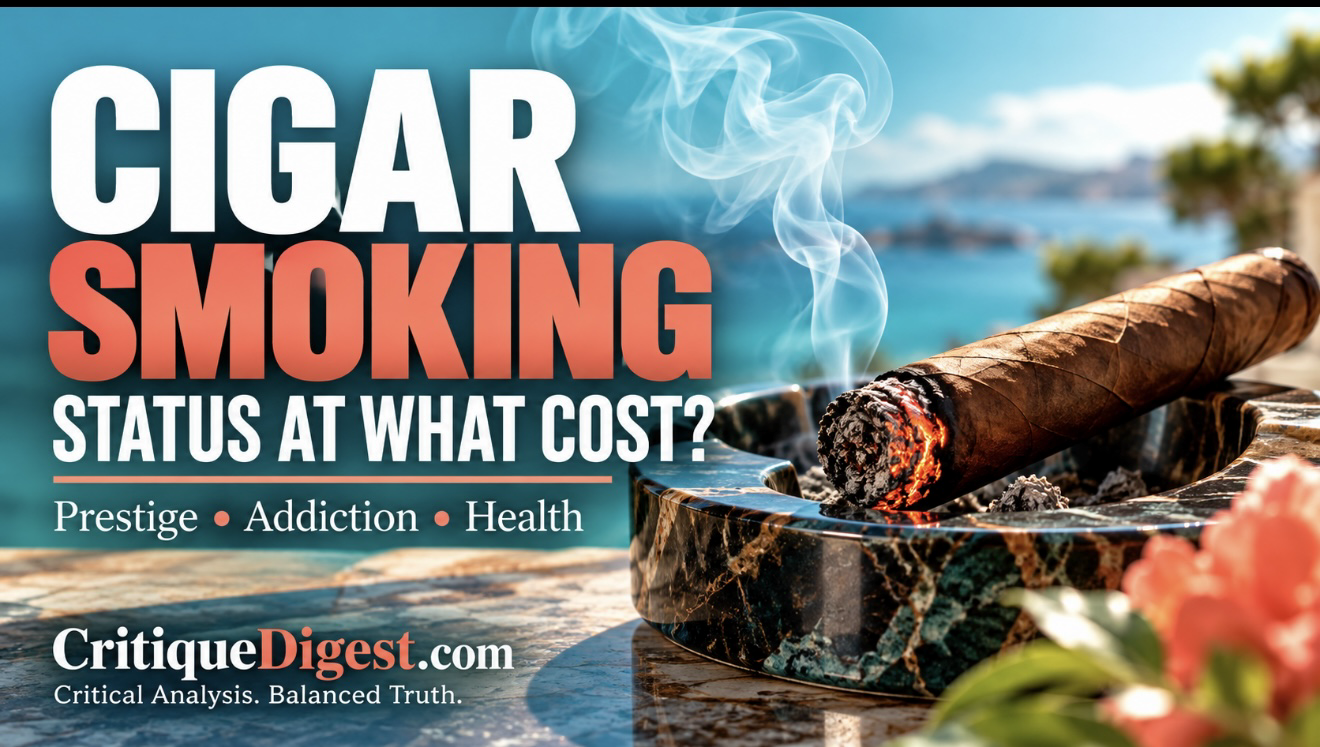
Cigar Smoking: A Status Symbol at What Cost?
Looking Beyond Prestige to Addiction and Health
🔥 When did burning tobacco become proof that someone has arrived in life?
In some social circles, a cigar projects wealth, confidence, and sophistication, turning a smoking habit into a public statement of success. Yet an expensive cigar cannot establish a person’s wisdom, achievement, or worth.
Equally, smoking a cigar does not automatically make someone delinquent, because character deserves to be judged by conduct rather than appearance. The more meaningful concern is whether the image of prestige distracts us from the health risks behind the smoke.
Cigars contain addictive nicotine, which can enter the body through the lining of the mouth even when the smoke is not inhaled. That makes “I do not inhale” an inadequate assurance of safety, rather than protection against dependence and harmful exposure. Cigar smoking causes cancers of the mouth, throat, esophagus, and lungs, while heavy use can also increase the risk of heart and lung disease.
The smoke also exposes nearby nonsmokers to harmful chemicals, making the consequences extend beyond the person holding the cigar. Although patterns of use affect the level of risk, occasional indulgence should not be mistaken for harmless indulgence. People struggling with dependence deserve practical support to quit, without ridicule or moral condemnation.
Ultimately, the strongest statement of success may be the freedom to protect one’s health without needing smoke to announce one’s importance.
CritiqueDigest.com: Critical Analysis. Balanced Truth.